Lunchtime Lottery: Why Saturday's 12:30 Kick-Off Turns Last-Man-Standing Leagues Into Quicksand
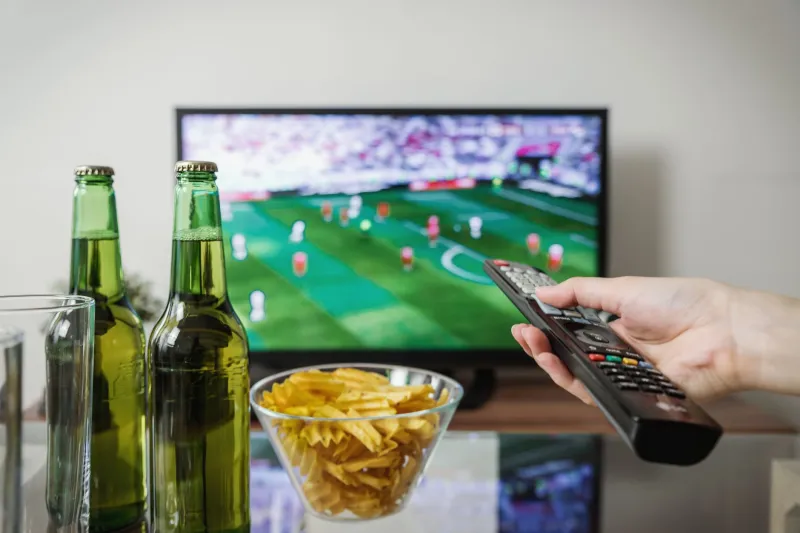
There is a particular kind of silence that falls over a pub at 12:28 on a Saturday. The pints are still half-full, the bacon rolls are being distributed with the solemnity of a coronation, and every Last-Man-Standing player in the room has convinced themselves that the early kick-off is a gift. A banker. A free hit. A chance to spend the rest of the afternoon pretending not to care about the 3pm scores.
Then the match starts, and within twenty minutes your carefully selected title contender is 1-0 down to a team that has not won away since August, the centre-half has been booked twice for arguing with the referee about the length of the grass, and your last man is staring into the middle distance like a man who has just remembered he left the oven on.
Welcome to the 12:30 curse. It is real, it is spiteful, and it has ruined more Last-Man-Standing campaigns than any injury crisis, fixture pile-up or ill-advised double-or-nothing gamble.
The myth of the sleepy lunchtime
On paper, the early kick-off should be the safest pick of the week. The crowd is quieter, the players are fresh, and the big clubs usually have enough quality to swat aside whichever mid-table side has been dragged into the television schedule for reasons known only to the broadcasters. That is the theory. The practice is more like a nature documentary in which the elegant predator slips on a wet rock and is immediately set upon by a gang of seagulls.
There is something about the 12:30 slot that scrambles the normal rules of football. Passes are slightly heavier. Tackles are slightly later. The atmosphere has the odd, half-awake tension of a Wetherspoons at opening time. Players who normally glide through matches look like they have been woken from a nap and asked to explain the offside rule to a confused relative.
And the referees? They seem to have a sixth sense for drama. A routine 12:30 fixture can produce more cards than a birthday party at Clinton Cards. Red cards arrive with the suddenness of a rain shower in Manchester, and VAR decisions take on the unhurried, slightly puzzled quality of a man trying to assemble flat-pack furniture without the instructions.
Why the early game is Last-Man-Standing quicksand
In a normal survivor league, you want certainty. You want a team that will win, ideally comfortably, and ideally without the sort of nerve-shredding finale that makes you question your life choices. The 12:30 kick-off offers the illusion of certainty while quietly removing the ground from beneath your feet.
First, there is the travel factor. An away trip to a lunchtime kick-off is a different beast. Players are on coaches at an hour when they would normally be eating breakfast. The pre-match routine is compressed. The warm-up feels slightly rushed. And if the home side scores early, the away team's game plan — carefully rehearsed over five days — can evaporate before the first pint of the afternoon has even been pulled.
Second, there is the psychological weight of being the opening act. The 12:30 game is the one everyone watches while pretending to be productive. It is the match that sets the tone for the entire Saturday. Players know this. Managers know this. And when a team that is expected to win goes behind, the panic is visible in a way it might not be at 3pm, when the rest of the football world is still finding its seat.
Third, there is the simple fact that the 12:30 slot attracts weird fixtures. Broadcasters want storylines. They want the promoted side at home to the champions, the relegation six-pointer with added needle, the reunion of a manager and the club that sacked him. These are not banker fixtures. These are narrative grenades, and your Last-Man-Standing pick is the one being asked to pull the pin.
A cautionary tale from the pub league
Two seasons ago, a friend of mine — let's call him Dave, because his name is Dave and he has never once objected — was sitting pretty in a 47-person Last-Man-Standing league. He had survived the opening weeks by picking the obvious title contenders at home, and he was feeling smug. The kind of smug that makes you order a pint you don't really want just to hold it while you explain your strategy to people who did not ask.
Week eight arrived, and Dave saw the 12:30 fixture: a top-four side at home to a team that had lost its last three. He picked the home side without hesitation. He even texted the group chat a picture of his selection with the caption 'free money'.
By 12:55, the home side were 2-0 down. By 13:10, their star striker had been sent off for a shove that looked like it had been choreographed by a panicked mime artist. By 13:45, Dave was standing outside the pub in the drizzle, staring at his phone and muttering about the referee. By 14:00, he was out of the competition, and the rest of us were trying to work out whether it was acceptable to laugh before or after he had finished his pint.
The lesson was not that Dave was foolish. The lesson was that the 12:30 kick-off had taken a perfectly sensible pick and turned it into a cautionary tale. It is not that the early game is always unpredictable. It is that it is unpredictable in a way that feels specifically designed to punish anyone who thought they had the whole thing figured out.
The tell-tale signs of a 12:30 trap
Not every lunchtime fixture is a death trap. Some are genuinely straightforward. The trick is knowing which is which. Here are the warning signs that should make you reach for a different pick.
- The away side has a midweek European fixture the following Tuesday. Managers hate this. Rotation happens. The team sheet looks like a bingo card, and your banker becomes a coin toss.
- The home side has just won a famous victory. They are hungover on their own headlines. The crowd expects a show. The players expect a show. The opposition, meanwhile, has spent the week being told they have no chance, which is exactly the sort of motivation that produces a stubborn, horrible 0-0 or an unlikely smash-and-grab.
- The referee is one of those officials who seems to enjoy being the centre of attention. You know the type. They book players for breathing too aggressively and give penalties for the sort of contact that would not get you a free drink in a busy pub.
- The fixture is a derby, a grudge match, or anything that the broadcasters have been trailing with dramatic music since Monday. Rivalry is brilliant for neutrals and terrible for Last-Man-Standing.
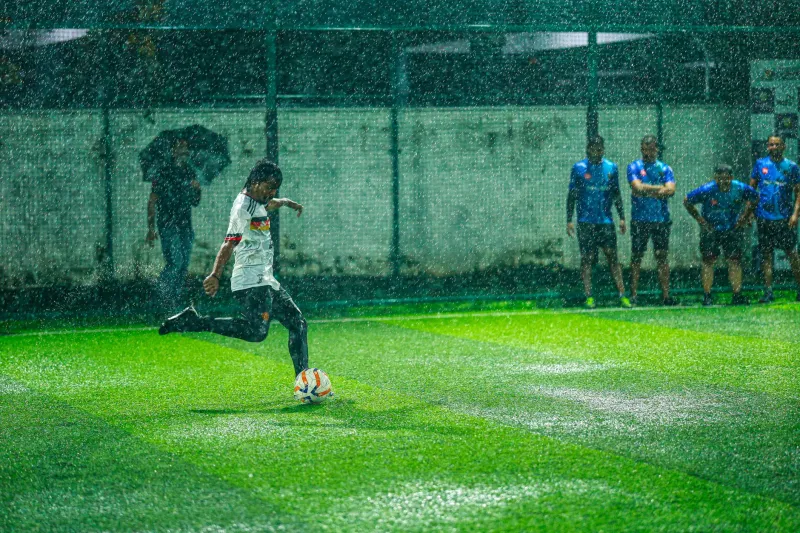
- The weather forecast is grim. A lunchtime kick-off in horizontal rain is not a football match. It is a lottery conducted by a man with a whistle and a grudge against dry socks.
When the contrarian early pick is actually smart
Here is the twist: the 12:30 curse is not a reason to avoid every early kick-off. It is a reason to think about them differently. While everyone else in your league is busy selecting the obvious big club at 3pm, the lunchtime game can offer a contrarian edge — if you pick the right kind of fixture.
The smart early pick is not the title contender at home to a bottom-half side. That is the sort of selection that looks clever until it isn't. The smart early pick is the unfashionable home team that nobody in your league wants to touch. The one that grinds out 1-0 wins while the rest of the country is still discussing the 3pm fixtures. The one whose manager has had a full week to prepare because his side played on Monday night. The one that treats a lunchtime kick-off not as an inconvenience, but as an opportunity to ruin someone else's weekend.
In a Last-Man-Standing league, the aim is not to pick the best team. It is to pick the team most likely to win. Sometimes that team is the one everyone else has overlooked because they are too busy staring at the shiny fixture at the top of the screen.
The lunchtime rulebook
If you want to survive the 12:30 slot, treat it like a dodgy pint: approach with caution, sniff it first, and be prepared to put it down and walk away. A few rules of thumb.
- Never use a 12:30 kick-off as your banker when a reliable 3pm alternative exists. The early game should be a bonus, not a foundation.
- Avoid any lunchtime fixture involving a team with a midweek European hangover, a manager who is one defeat away from a crisis, or a striker who has just been on the front page of the papers for the wrong reasons.
- If you are going to gamble on the early game, gamble on the underdog at home. The pub league will laugh at you. They will stop laughing when the 1-0 comes in.
- Remember that the 12:30 kick-off is a fixture, not a personality test. You are not a coward for avoiding it. You are a survivor.
The Saturday lunchtime game is not evil. It is just chaotic in a way that looks innocent until you have staked your last-man-standing hopes on it. Treat it with respect, pick your moments, and never — ever — send a 'free money' message to the group chat before the first goal has gone in. The football gods have a long memory, and they have a particular fondness for making smug people look silly before lunch.